

Convenings
The VRC regularly convenes stakeholders on subjects of strategic interest to the violence reduction field. Each year, the VRC holds symposia to advance knowledge and practice in specific policy areas, using a multi-disciplinary approach that engages academics, policymakers, and practitioners, as well as individuals and groups with relevant lived experiences.
Symposium on Social Media and Community Violence
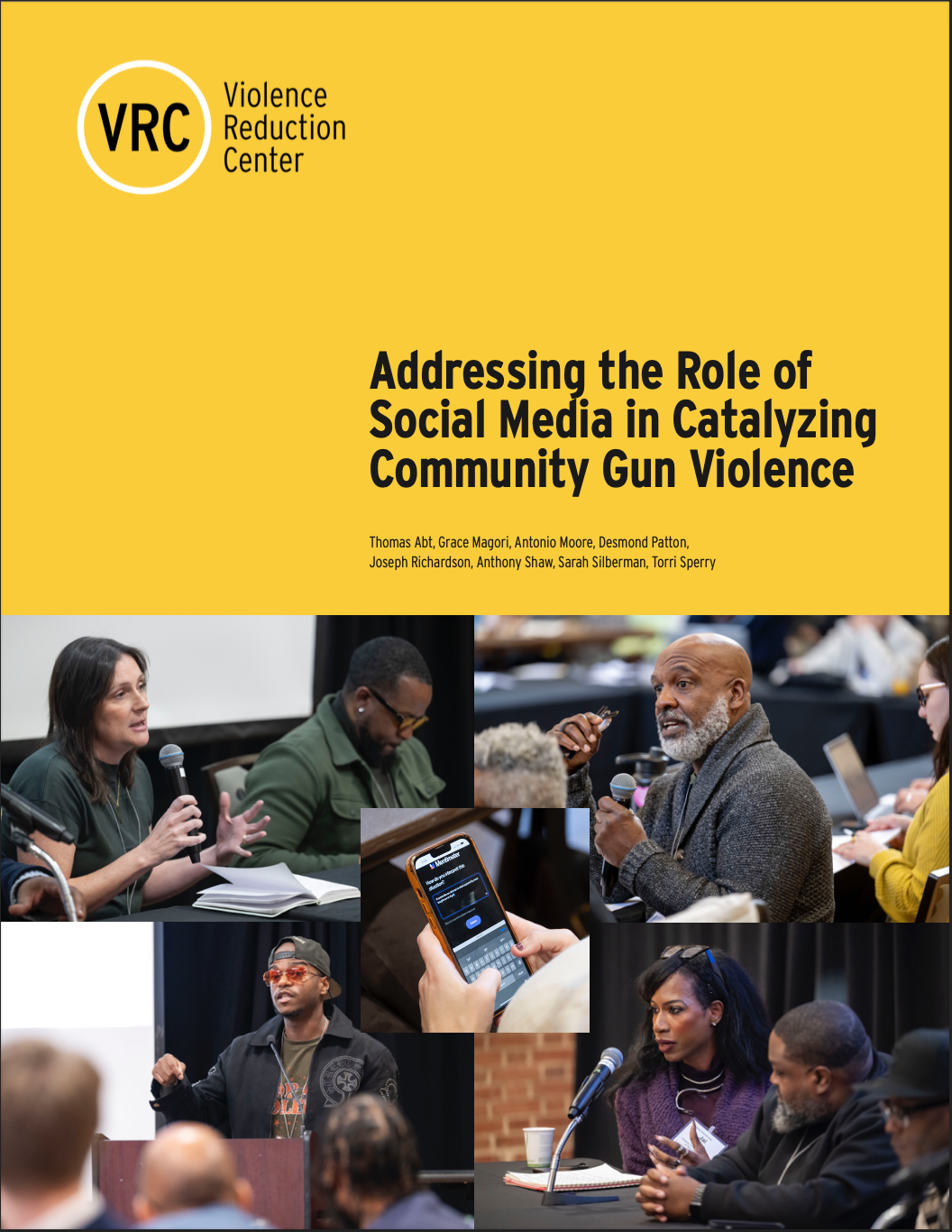
It is increasingly well understood that social media disputes are a significant driver of violent conflicts in the real world. This is especially so for community violence. While this challenge has been identified, concrete solutions have been slow to emerge.
To address this gap, the VRC held the Symposium on Social Media and Community Violence on the University of Maryland, College Park campus. On November 10th, 2025, over sixty experts from community-based organizations, law enforcement, government,philanthropy, and academia convened for a day-long session discussing how to best prevent online conflicts from turning violent in the real world.
On March 5th, 2026, the VRC published "Addressing the Role of Social Media in Catalyzing Community Gun Violence," a white paper that documents discussions at the symposium, describes new strategies, proposes pilot programs, and identifies areas for future research. Watch a recording of the webinar here.
This Symposium was supported by the Everytown for Gun Safety Support Fund and PROGRESS.
Symposium on Cognitive Behavioral Interventions for Violence Prevention
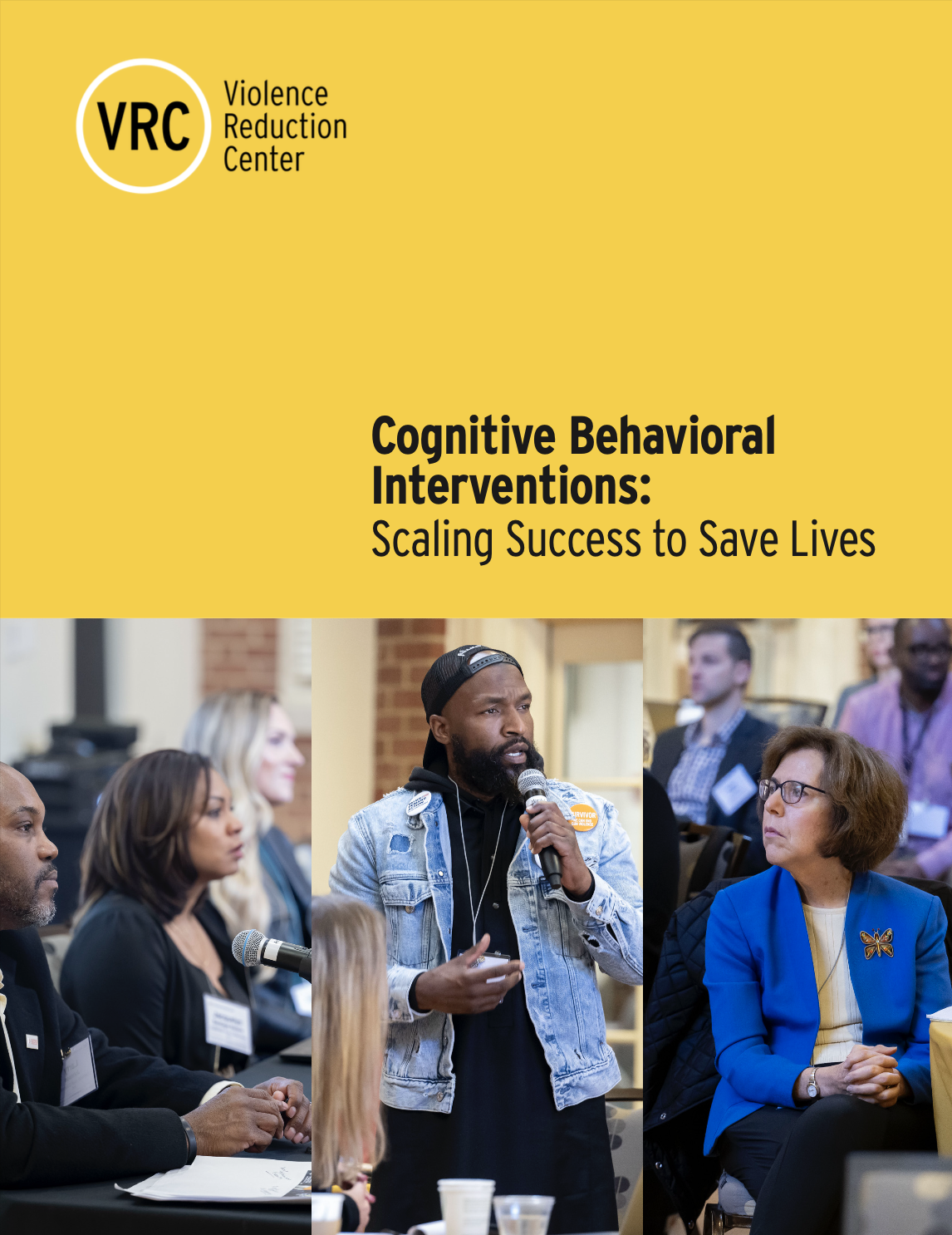
Cognitive behavioral interventions (CBIs) have emerged as a key evidence-informed intervention for addressing community gun violence. That said, the capacity to implement these strategies remains limited, particularly when treating those at the highest risk for such violence.
On October 22nd, 2024, the VRC brought together leading academics, on-the-ground practitioners, key government officials, and interested funders to discuss the power and promise of these life-saving strategies. At the Symposium on Cognitive Behavioral Interventions for Violence Prevention, participants surveyed the scientific evidence, discussed the details of implementation, explored the intersection of CBIs and trauma-informed practice, and brainstormed ideas for building capacity to scale these strategies further.
On March 19, 2025, the VRC published a white paper, "Cognitive Behavioral Interventions: Scaling Success to Save Lives," summarizing the events that occurred at the symposium. View a recording of the webinar with panelists Judith Beck (Beck Institute), Kim Smith (UChicago Crime Lab), James "JT" Timpson (Roca Impact Institute), and Michael-Sean Spence (Everytown for Gun Safety). UMD's College of Behavioral and Social Sciences also featured the white paper release on their website.
The Symposium, white paper, and webinar were supported by the Everytown for Gun Safety Support Fund.
Symposium on Community Violence Problem Analysis
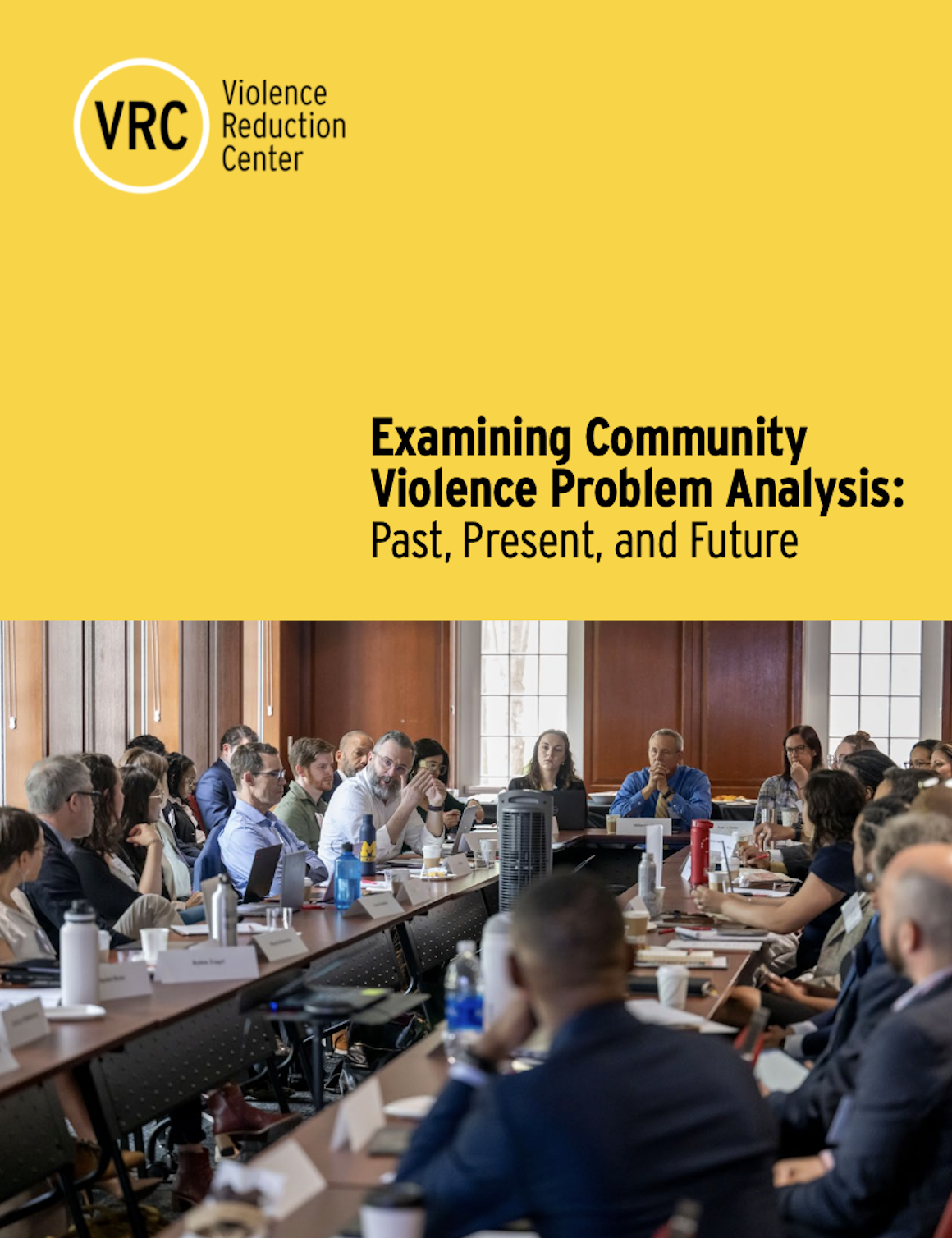 In cities across the United States, research demonstrates that community violence concentrates in and around small groups of people and places. Analyses that identify these concentrations can help local policymakers guide anti-violence resources to where they are needed most, but unfortunately, the capacity for conducting them remains limited.
On April 30th, 2024, the VRC convened over forty nationally recognized experts and other stakeholders from academia, community-based organizations, government, and philanthropy on the University of Maryland, College Park campus for a day-long session. At the Symposium on Community Violence Problem Analysis, participants discussed best practices, practical challenges, and strategic opportunities for improving quality and expanding access to these critically needed tools.
On October 15th, the VRC released a white paper summarizing the session and offering recommendations for action. On the same day, the VRC held a webinar discussing the paper’s findings with David Muhammad (National Institute for Criminal Justice Reform), Alejandro Gimenez-Santana (Rutgers School of Criminal Justice), and Daniel Webster (Johns Hopkins Bloomberg School of Public Health).
The Symposium, white paper, and webinar were supported by the Everytown for Gun Safety Support Fund and the Joyce Foundation.